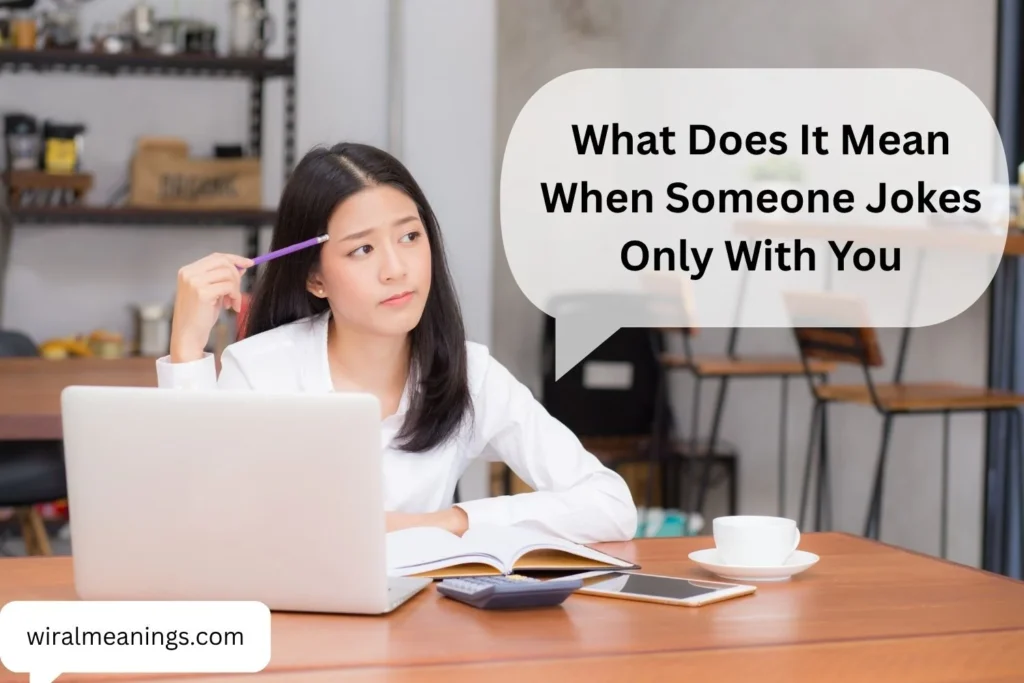
Have you ever noticed that one person in your friend group or class always jokes specifically with you—and not others? It can feel confusing, exciting, or even a little suspicious. You might start wondering, “What does it mean when someone jokes only with you?” Is it friendship? Flirting? Or just their personality?
This behavior is actually more common than you think, especially among teens, young adults, and even coworkers. Humor is a powerful social tool—it builds connections, reduces tension, and sometimes secretly expresses emotions people can’t say directly. When someone repeatedly jokes only with you, it may signal comfort, trust, attraction, or simply a unique social bond.
In this article, we’ll break down everything you need to know about this behavior in a simple, relatable, and SEO-friendly way so you can finally understand what’s really going on behind those jokes.
What Does It Mean When Someone Jokes Only With You? (Psychological Meaning Explained)
When someone consistently jokes only with you, it usually means they feel emotionally comfortable and socially connected to you. In social psychology, humor is often a “low-risk intimacy tool”—meaning people use it to build closeness without being too direct or vulnerable.
1. Emotional Comfort and Safety
If a person jokes only with you, it often means:
- They feel safe around you
- They trust your reactions
- They enjoy your company specifically
Humor becomes a way of saying, “I like being around you,” without actually saying it.
2. A Unique Social Bond
Sometimes people naturally form “inside joke” relationships. This happens when:
- You both understand each other easily
- You share similar humor styles
- You react positively to each other
3. Hidden Communication Tool
Not all jokes are just jokes. Some carry hidden meanings:
- Teasing = attention-seeking
- Playful sarcasm = emotional connection
- Repeated jokes = bonding habit
So, the answer to what does it mean when someone jokes only with you often lies in emotional closeness and comfort.
Why Someone Jokes Only With You (Top Possible Reasons)

There isn’t just one explanation. Human behavior is complex, and jokes can mean different things depending on context.
1. They Like You (Romantic or Emotional Interest)
One of the most common reasons is attraction. When someone likes you, they often:
- Joke more around you
- Try to make you laugh specifically
- Seek your attention through humor
Humor is a subtle flirting strategy because it feels natural and non-threatening.
2. They See You as Their Comfort Person
Some people naturally pick one “safe person” to joke with. This could mean:
- You make them feel relaxed
- You don’t judge them
- They can be themselves around you
3. They Enjoy Your Reaction
Sometimes it’s not about deep feelings—it’s about your response:
- If you laugh easily, they joke more
- If you respond playfully, they continue
- Your reactions reinforce their behavior
4. They Are Naturally Playful With You
Some personalities are just more humorous with specific people. It may not be intentional—it just “clicks.”
5. They Are Testing Your Interest
Jokes can be a subtle way of checking:
- Do you like them back?
- Are you comfortable with them?
- Will you respond positively?
Signs It’s Friendly Teasing vs Romantic Interest
Sometimes it’s hard to decode intentions. Here’s a simple comparison table:
| Behavior | Friendly Teasing | Romantic Interest |
|---|---|---|
| Type of jokes | General humor, group jokes | Personal, targeted jokes |
| Attention | Shared with everyone | Focused mostly on you |
| Body language | Neutral | Eye contact, leaning in |
| Frequency | Occasional | Frequent and consistent |
| Emotional tone | Casual | Slightly nervous or excited |
If someone jokes only with you and shows strong attention + body language signs, it might go beyond friendship.
Real-Life Examples of “Jokes Only With You” Behavior
Understanding theory is helpful, but real-life examples make it clearer.
Example 1: Classroom Situation
Ali always teases Sara in class:
Ali: “You’re going to fail this test… I should start tutoring you for free.”
Sara: “You wish I needed your help!”
(They both laugh, but he doesn’t joke like this with others.)
👉 Meaning: Comfort + playful attention-seeking
Example 2: Workplace Humor
A coworker only jokes with you during breaks:
Coworker: “You’re the only one who understands my coffee addiction… we should start a support group.”
👉 Meaning: Bond-building and emotional comfort
Example 3: Online Chats
They send memes only to you:
- Inside jokes
- Random funny reels
- Personal teasing messages
👉 Meaning: Strong personal connection or interest
What to Do When Someone Jokes Only With You
If you’re wondering how to respond, here are some simple steps:
1. Observe Their Consistency
Ask yourself:
- Do they joke only with you all the time?
- Or is it occasional?
Consistency matters more than one-time behavior.
2. Match Their Energy
If you’re comfortable:
- Joke back
- Keep the conversation playful
- Build mutual humor
3. Look for Other Signs
Don’t rely only on jokes. Check:
- Body language
- Attention level
- Whether they seek you out
4. Set Boundaries if Needed
If the jokes feel uncomfortable:
- Respond less emotionally
- Politely change the topic
- Make your limits clear
5. Don’t Overthink Immediately
Not every joke has a hidden meaning. Sometimes:
- People are just funny
- They enjoy your presence casually
Common Misunderstandings About This Behavior
People often misinterpret humor-based attention. Here are common mistakes:
1. Thinking It Always Means Love
Not always. Sometimes it’s just friendliness.
2. Assuming It’s Mocking
Playful teasing is different from disrespect. Tone matters.
3. Ignoring Other Social Signals
Jokes alone don’t define intention—look at full behavior.
4. Overanalyzing Every Message
Not every meme or joke has deep meaning.
FAQs: What Does It Mean When Someone Jokes Only With You?
1. What does it mean when someone jokes only with you every day?
It usually means they feel comfortable with you and enjoy your presence. It may also indicate emotional closeness or interest.
2. Does joking only with me mean they like me?
Not always, but it can be a sign of attraction if combined with attention, eye contact, and personal interest.
3. Why does a guy/girl joke only with me in class or work?
They may see you as someone safe, fun, or interesting to interact with regularly.
4. Is it flirting when someone jokes only with you?
It can be. Flirting often includes humor, teasing, and playful attention focused on one person.
5. What if they joke with others but joke more with me?
That usually means you have a stronger connection or special comfort level with them.
6. Can joking only with me mean friendship?
Yes, strong friendships often include inside jokes and exclusive humor.
7. Why do I feel special when someone jokes only with me?
Because your brain interprets exclusive attention as emotional importance or social bonding.
8. Should I respond if someone jokes only with me?
If you’re comfortable, yes—responding helps build connection and clarity.
9. What if the jokes feel confusing or mixed signals?
Pay attention to consistency and other behaviors, not just humor.
Conclusion
So, what does it mean when someone jokes only with you? In most cases, it signals comfort, connection, or interest—but the exact meaning depends on context, personality, and behavior patterns. It could be friendly teasing, emotional bonding, or even subtle flirting.
The key is not to rely on jokes alone but to observe the overall interaction. Pay attention to consistency, tone, and other social cues before jumping to conclusions.
At the end of the day, humor is one of the most powerful ways humans connect. If someone jokes only with you, it usually means one thing: you matter in their social world more than you think.
read more

Victor Matt is a results-driven digital creator and strategist focused on helping people win in the modern online world. His work blends smart systems, practical insights, and AI-powered methods to turn ideas into real outcomes. With a mindset rooted in growth and purpose, Victor shares strategies that are built to perform—not just impress.